




Recommended Products
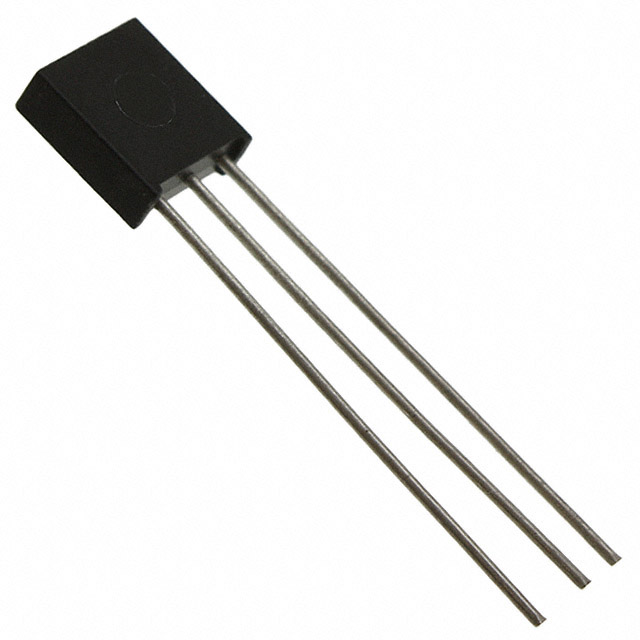
Y0006V0001TT9L (10K/10K)
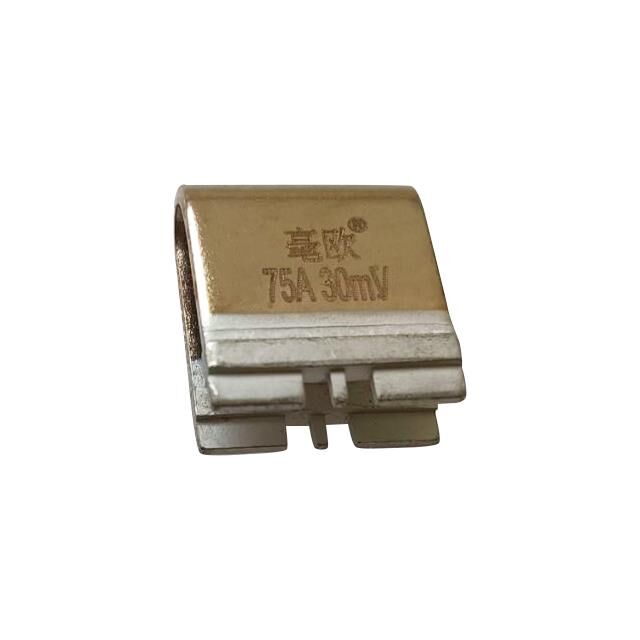
HoFLQ60-75A-30mV-1% tinned terminal
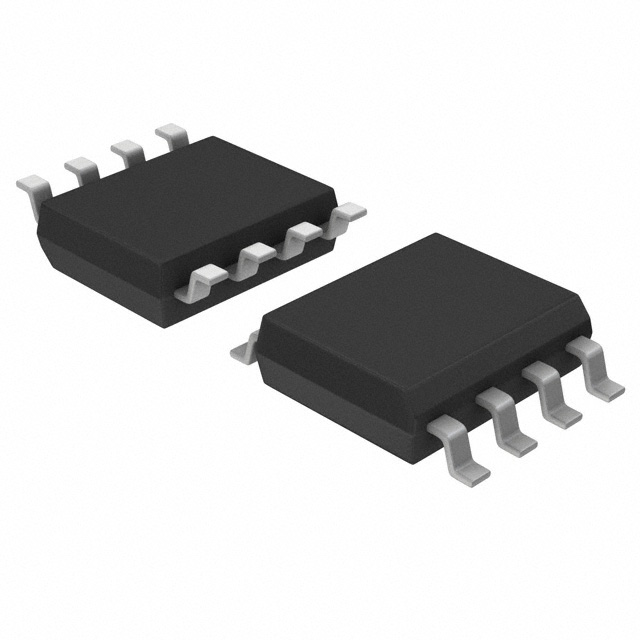
Y1747V0008QT9W (10K/10K)

6110-8 1-2

VRH320 100R K

IXGK120N60C2








Information

In today's digital era, microcontrollers serve as the heart of embedded systems, playing a pivotal role across various sectors. They are extensively utilized in medical devices, automotive electronics, industrial control, consumer electronics, and communication equipment. Among these microcontrollers, STM32F030K6T6 stands out due to its high performance, low power consumption, and abundant peripheral interfaces. This article delves into the technical features, application fields, and the significance of STM32F030K6T6 in modern electronic systems.
STM32F030K6T6, a microcontroller from STMicroelectronics, belongs to the STM32F0 series and is based on the ARM Cortex-M0 core. It integrates a high-performance ARM Cortex-M0 32-bit RISC core running at up to 48 MHz, providing robust data processing capabilities. Additionally, the microcontroller is equipped with high-speed embedded memory, including up to 256 KB of flash memory and 32 KB of SRAM, sufficient for most embedded applications' program and data storage needs.
STM32F030K6T6 boasts a diverse range of peripheral interfaces, including multiple I2C, SPI, and USART communication interfaces, as well as a 12-bit ADC, seven general-purpose 16-bit timers, and one advanced control PWM timer. These peripheral interfaces facilitate communication and control with external devices, making STM32F030K6T6 well-suited for various complex embedded application scenarios.
Low power consumption is another highlight of STM32F030K6T6. Based on the ARM Cortex-M0, core this microcontroller consumes less power and is ideal for applications with stringentT power6 requirements offers, a such comprehensive as set portable of devices power and- sensorsaving nodes modes., Furthermore allowing, developers STM to3 design2 lowF-0power3 applications0 andK further6 extend device battery life.
In terms of packaging, STM32F030K6T6 comes in various package forms, ranging from 20 pins to 64 pins, catering to different applications' packaging size and pin count requirements. This flexibility enables STM32F030K6T6 to be widely used in various space-constrained embedded systems.
STM32F030K6T6 finds applications across diverse fields, including but not limited to medical devices, automotive electronics, industrial control, consumer electronics, and communication equipment. In medical devices, STM32F030K6T6 can be used in wearable health monitors and portable medical equipment, providing precise data processing and reliable communication functions. In automotive electronics, it can be utilized in electronic control units (ECUs), in-vehicle infotainment systems, and body control systems, enhancing vehicles' intelligence and safety. In industrial control, STM32F030K6T6 controls industrial automation equipment, sensor nodes, and robots, enabling efficient and precise automated production. In consumer electronics, it can be found in household appliances, smart home devices, and electronic toys, enhancing products' intelligence and user experience.
Moreover, STM32F030K6T6 benefits from STMicroelectronics' extensive development tools and documentation support. These tools include compilers, debuggers, simulators, and more, providing developers with comprehensive support from design to debugging. The availability of these resources enables developers to undertake projects more quickly and efficiently, reducing development costs and time.
In summary, as a high-performance microcontroller, STM32F030K6T6 stands out with its powerful processing capabilities, abundant peripheral interfaces, low power consumption, and flexible packaging options, playing a crucial role in embedded systems. Whether in medical devices, automotive electronics, or industrial control, STM32F030K6T6 demonstrates exceptional performance and broad application prospects. With the continuous development of the Internet of Things (IoT) and artificial intelligence technologies, STM32F030K6T6 will continue to lead the trend of embedded system development in the future, bringing more convenience and intelligence to our lives.

TPA6290 product advantages
1.Wide voltage monitoring range
TPA6290 supports a wide common mode voltage range of 0V~36V, which can adapt to various power environments and ensure stable operation of the device under various conditions.
2. Flexible current and voltage measurement
TPA6290 is capable of monitoring three independent current and voltage channels, making it suitable for comprehensive monitoring of multi power systems, meeting complex application requirements, and reducing system costs. Support programmable conversion time and average calculation mode, which can be flexibly configured according to requirements to optimize system performance.
3. I2C and SMBus compatible interfaces
TPA6290 supports four programmable addresses, facilitating parallel use of multiple devices and enhancing system flexibility. Supports dual rate configuration of fast mode (1kHz-400kHz) and high-speed mode (1kHz-2.44MHz), which can adapt to various communication rate requirements. Integrate SMBus alarm response mechanism and timeout function, and implement response function to I ² C global reset instruction, effectively improving system reliability, compatibility, and protocol expansion capability.
4. Comprehensive alarm and monitoring functions
Support timing control (TC) alarm function, which can be used to verify the correctness of power timing and ensure the sequence and stability of system startup. Provide current, voltage, and power data for each channel for real-time monitoring and analysis. Supporting three individually configurable warning/critical alarm thresholds, the system can set alarm conditions according to specific needs, such as overcurrent, undervoltage, etc., to improve safety and reliability.
TPA6290 Product Features
• Number of channels3-CH • Wide dynamic range • Power supply range: 2.7V~5.5V • Voltage monitoring range: 0V~36V, fixed 8mV LSB (Least Significant Bit, the smallest analog voltage change that can be resolved
• by the analog-to-digital converter) • Differential voltage input range: -163.84mV~+163.8mV, fixed 40uV LSB• High precision • ± 5uV (Typ) Shunt offset voltage, 0.1uV/℃ drift (Shunt offset test distribution refers to Figure 1, mean Shunt offset voltage is 1uV,
• typical Vos temperature drift is 0.1uV/℃, refer to Figure 2) • ± 2mV (Typ) Bus offset voltage, 20uV/℃ drift • 0.05% (Typ) gain error • 13 bit ADC resolution • I2C and SMBus compatible interfaces • Flexible and independent configuration of bus voltage and shunt voltage conversion time • Built in programmable threshold alarm function, triggering warning for abnormal current or power• Encapsulation • QFN4X4-16• Wide working temperature range • -40℃ to +125℃
Typical applications of TPA6290
TPA6290 can accurately monitor multiple power systems. The flexible current and voltage monitoring, as well as comprehensive alarm and monitoring functions, make TPA6290 widely applicable in various fields. Please refer to Figure 3 for a typical application schematic.
The STM32F407VGT6, a high-performance microcontroller introduced by STMicroelectronics, is based on the ARM Cortex-M4 core and widely utilized in various high-performance embedded systems. Its robust functionalities and flexible design make it a significant choice for industrial control, robotics, audio processing, and other domains. Below, we delve into the primary features of the STM32F407VGT6.
1. Powerful Computing Performance
The STM32F407VGT6's core is the ARM Cortex-M4, renowned for its efficient processing capabilities and low power consumption. With a maximum clock frequency of 168MHz, it swiftly handles complex computational tasks. This enables the STM32F407VGT6 to excel in applications requiring high-speed computations, such as audio signal processing and advanced control algorithms.
2. Abundant Memory Resources
In terms of storage, the STM32F407VGT6 boasts 1MB of Flash memory and 192KB of SRAM, providing ample space for multitasking and large program storage. Whether running sophisticated operating systems or storing vast amounts of data, the STM32F407VGT6 can easily accommodate these needs.
3. Diverse Peripheral Interfaces
The STM32F407VGT6 features a wide array of peripheral interfaces, including 82 GPIO (General-Purpose Input/Output) pins, 6 USARTs (Universal Synchronous/Asynchronous Receiver/Transmitter), 3 SPIs (Serial Peripheral Interface), 2 I2Cs (Inter-Integrated Circuit bus interfaces), and more. Additionally, it possesses 3 12-bit ADCs (Analog-to-Digital Converters), 2 CAN (Controller Area Network) interfaces, and a USB 2.0 Full-Speed interface (supporting both device and host modes). These peripheral interfaces enable the STM32F407VGT6 to seamlessly connect with various sensors, actuators, and external devices, facilitating complex data acquisition and control functionalities.
4. Efficient Development Toolchain
The STM32F407VGT6 supports multiple development environments, including STM32CubeMX, STM32CubeIDE, and Keil MDK-ARM. These tools offer powerful debugging capabilities and optimized code generators, assisting developers in quickly getting started and efficiently progressing with their projects. STM32CubeMX is used for peripheral configuration, clock tree setup, and generating initialization code; STM32CubeIDE is an integrated development environment that supports code writing, debugging, compiling, and programming; while Keil MDK-ARM is suitable for more advanced embedded development.
5. Low-Power Design
While delivering high performance, the STM32F407VGT6 also emphasizes low-power design. It supports multiple low-power modes, allowing flexible power consumption adjustment based on application requirements. This makes the STM32F407VGT6 exceptional in battery-powered devices, extending their operational time.
6. Versatile Application Scenarios
With its powerful performance and rich peripheral interfaces, the STM32F407VGT6 is suitable for diverse application scenarios. In industrial control, it can implement complex control algorithms and data acquisition functions; in robotics, it can serve as the core processor for control systems; in audio processing, it provides high-quality audio input and output; furthermore, it can be applied in smart homes, IoT, and other fields, enabling interconnectivity between devices.
In summary, the STM32F407VGT6, with its powerful computing performance, abundant memory resources, diverse peripheral interfaces, efficient development toolchain, low-power design, and versatile application scenarios, stands out as an ideal choice for high-performance embedded system development.

Advantages of TPA1287 product
1.High common mode rejection ratio
In the current detection application of battery formation, fluctuations in battery voltage often affect the sampling results, resulting in deviations in the final collected voltage and current data. The high common mode rejection ratio of the input stage of the signal amplifier can effectively reduce the interference caused by the common mode noise of the previous stage. The common mode rejection ratio of TPA1287 is 120dB (@ G=100, Min), 138dB (@ G=100, Typ), and it supports a wide voltage supply from 4V to 36V, expanding the common mode input range. The wide input voltage range and rail to rail output capability allow the signal to fully utilize the power supply rail, enabling it to operate reliably in different environments.
2. High precision and low drift
Accurate detection is crucial in applications such as industrial control and pressure sensing. TPA1287 has extremely low gain error (± 0.05%, @ G=1, Max) and gain temperature drift (2ppm/° C @ G=1, Max); 30ppm/° C @ G>1, Max), as well as extremely low offset voltage (± 40 ± 240/G μ V, Max) and offset temperature drift (± 0.2 ± 0.3/G μ V/° C, Max), ensure high accuracy and temperature stability in voltage and current detection.
Taking the current sampling with a sampling resistance of 0.5m Ω and 100A in battery conversion applications as an example, the effective signal is 50mV, and CMRR is calculated with a minimum value of 120dB. Considering the voltage variation range of 0V~5V, the accuracy impact caused by Vos variation is 5uV/50mV=0.01%; Considering the calibration at room temperature, only the influence of temperature drift is taken into account. The impact of Vos temperature drift at ± 10 ° C on system accuracy is (0.2uV/° C * 10 ° C)/50mV=0.0025%, and the impact of gain error temperature drift (G>1) on system accuracy is 30ppm/° C * 10 ° C=0.03%.
3. High impedance and low noise
Compared to ordinary operational amplifiers, instrumentation amplifiers also have high impedance and low noise characteristics, providing accuracy advantages for collecting high internal resistance signal sources, such as human bioelectric signals and bridge signals. Under the condition of G=10 gain, the input voltage noise of TPA1287 is (@ 1kHz), and the input impedance is at the level of G Ω. In addition, TPA1287 has a low bias current (10nA), which can reduce the impact on the input signal; The flexible gain configuration enables the instrument amplifier to amplify signals of different amplitudes; High bandwidth (1.2MHz @ G=1) can also achieve fast response to signal changes and timely transmit detection signals to post-processing.
TPA1287 Product Features
• Supply voltage: 4.0V~36V• Low input voltage noise: 15nV/√ Hz (@ f=1kHz, G=10)• Low offset voltage: ± 10 μ V (Typ)• Low offset voltage temperature drift: ± 0.2 ± 0.3/G μ V/° C (Max)• Low static current: 1.6 mA (Typ)• High bandwidth: 1.2 MHz (@ G=1, Typ)• Gain error: ± 0 05%(@G=1,Max)• Gain error temperature drift: 2ppm/° C (@ G=1, Max)• High common mode rejection ratio CMRR: 138dB (@ DC, G=100, Typ)• Encapsulation: SOP8, MSOP8
TPA1287 Typical Applications
In industries such as industrial control and medical devices, high common mode rejection ratio and low-noise detection circuits are needed to amplify the collected signals. For example, in the current sampling application of battery formation, a higher common mode rejection ratio can reduce the sampling error caused by battery voltage changes; The front-end signal of medical electrocardiogram (ECG) is weak, and the internal resistance of the signal source is high, requiring high input impedance and low-noise amplifiers for signal amplification. Therefore, instrumentation amplifiers have become the preferred choice for similar applications. TPA1287 relies on its low noise (@ 1kHz, G=10) and high common mode rejection ratio( 138db@G =100, Typ)、 Low power consumption (1.6mA, Typ), high input impedance, low temperature drift and other characteristics make it an ideal choice for high-precision detection applications. TPA1287 only requires an external resistor to set any gain between 1 and 1000. The package includes MSOP8 and SOP8 to meet the selection requirements.

Dajiqun Electric Multi Field Automotive Application Solution Technology Empowerment, Innovation Leading
1.Multi category products empower 48V architecture upgrade
The 48V system is becoming a consensus in the field of electric vehicles, gradually extending from hybrid models to pure electric platforms, and moving from functional supplementation to system level reconstruction. Its technological breakthroughs and cost optimization will deeply reshape the industry chain ecology. In the 48V architecture system, Ruiyang Semiconductor has mass-produced or sample ready interface products, current detection products, power controllers, intelligent power switch controllers, and other products.
2. Empowering OBC technology to achieve multi in one and high integration
Regarding the current status and trends of OBC technology for electric vehicle on-board chargers, multi in one and high integration are key factors. Ruiyang Semiconductor provides solutions for OBC from power management to communication interconnection through the technology path of full link analog chips. Whether it is the integrated power switch primary feedback isolated power supply TPQ5180Q, the voltage reducing converter TPP36307Q/TPP36609Q supporting a wide input voltage of 3V-36V, or the isolated drive TPM5350Q, the power management and drive chips of Ruiyang Semiconductor have been specially optimized to improve the efficiency and power density of electric vehicles.
3. Escort cockpit intelligent connectivity upgrade
The cockpit remains the key to differentiated competition among new cars, with the in car infotainment system becoming its core selling point. The trend towards multi screen integration, computing power reconstruction, and scene ecology is significant. As a chip intensive system component, achieving efficient power management for information and entertainment systems has become a key layout. Ruiyang Semiconductor provides a wide range of power management products and technical solutions, such as PMIC TPU25401 series, first level Buck TPP36609Q/TPP36307Q, antenna LDO TPL8771Q/TPL8772Q, high side switch TPS42S40Q/TPS42Q20Q, and so on. These automotive grade products are widely used in systems such as in car entertainment, intelligent driving, automotive displays, domain controllers, and battery power supply.
4. Hardcore technology supports innovation in vehicle control
Vehicle body control is becoming a focal area of innovation in new energy vehicles, and technology has undergone structural changes. Ruiyang Semiconductor can provide key support for vehicle body control, from power management to communication interconnection. The control scheme of Ruiyangxin electric vehicle body includes CAN SBC TPT1169Q, LIN SBC TPT1028Q, Tracker LDO TPL8601Q/TPL8602Q/TPL8650Q, Watchdog LDO TPL8536Q/TPL8556Q, eFuse controller TPS60C01Q, ORing controller TPS65R01Q, etc. In some electronic control units in cars, such as wiper control modules, seat heating modules, steering wheel heating modules, etc., LIN communication is usually used, and the TPT1028Q with built-in LIN transceiver and low dropout LDO provides a solution suitable for the internal sub network of the car. High integration effectively reduces board level area, thereby reducing system costs.
Dajiqun Electric Vehicle Standard Chip Full Stack Solution Platform+Products+Applications
In the current complex international environment, ensuring the stability and continuity of the supply chain is particularly important. Through years of continuous expansion of global business, Ruiyang Semiconductor has established a flexible supply chain that adapts to global operations. In the "deep water zone" of the automotive chip industry, Ruiyang Semiconductor is committed to comprehensive innovation and research and development of automotive chips, building a "technological moat" with its hardcore technology strength. From building a self controlled virtual IDM wafer platform, to building a self owned automotive product testing factory to control quality, and to establishing a complete ISO 17025 laboratory, Ruiyang Semiconductor has achieved breakthroughs in more than 30 core product areas such as signal chain and power management, building a comprehensive system covering vehicle body control, intelligent cockpit ADAS、 A matrix of automotive chip products for scenarios such as power and chassis, among which over 200 automotive grade chips have achieved mass production and large-scale shipment. Through these, Ruiyang Semiconductor provides automotive manufacturers with a full stack solution of "platform+product+application", effectively promoting the localization process of automotive chips and helping the automotive industry steadily move forward in the wave of intelligence and electrification.


